


Nordic Norway
This website is partially under construction!
Norway
Norway is a sovereign and unitary monarchy whose territory comprises the western portion of the Scandinavian Peninsula plus the island Jan Mayen and the archipelago of Svalbard.

Northern Light
The Nordic Light also known as Aurora Borealis.
An aurora, sometimes referred to as a polar light or northern light, is a natural light display in the sky.
The best chance of spotting the lights is between late September and late March in northern parts of Norway.

Arctic - Svalbard
Svalbard is a Norwegian archipelago in the Arctic Ocean. Situated north of mainland Europe, it is about midway between continental Norway and the North Pole.
Svalbard is famous for its wild nature and polar bears.
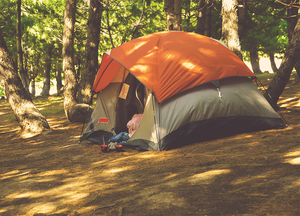
Camping time
The Outdoor Recreation Act (Norwegian: Friluftsloven) is a Norwegian law from 1957 that codifies the most important parts of the long standing rights of the public to access the wilderness and to exploit it in certain ways.
Nordic
Norden is a Scandinavian term for the Nordic countries.
The Nordic countries or Nordics are a geographical and cultural region in Northern Europe and the North Atlantic, where they are most commonly known as Norden (The North). They consist of Denmark, Finland, Iceland, Norway, and Sweden, including their associated territories (Greenland, the Faroe Islands, and the Åland Islands).
Meet us in nature, see all the nature attractions
Experience the fjords, mountains, waterfalls, national parks, glaciers, northern lights, midnight sun and arctic Svalbard.


Travel around Norway
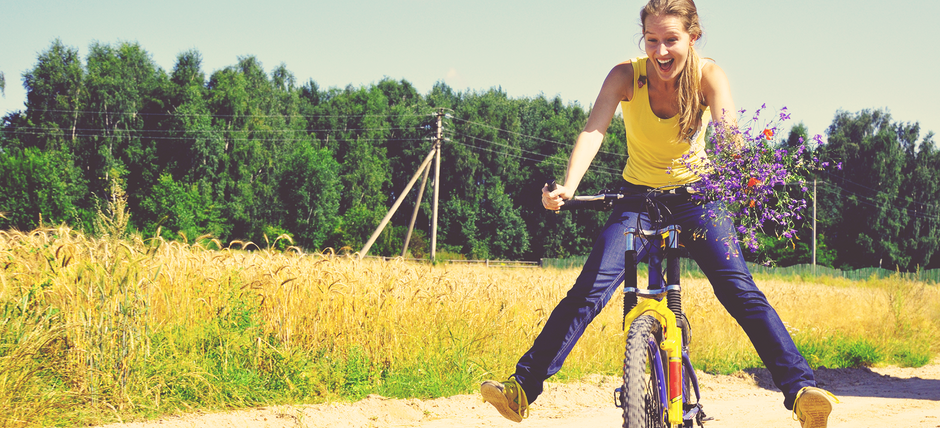
With boots, bike ...
car, train, bus, airplane or boat...
Oslo - Norway
Oslo is the capital of Norway and the country’s largest city with over 700,000 inhabitants.
It lies at the head of Oslo Fjord in the southeastern part of the country.
It is a compact capital city surrounded by the Oslo Fjord on its south side and the national protected forest Marka to its east, north and west.


Lofoten - Norway
Lofoten is an archipelago located in Nordland, west in the sea north of the Arctic Circle. Lofoten has distinctive scenery with dramatic mountains and peaks, open sea and sheltered bays, beaches, and untouched lands.

Geiranger - Norway
Geiranger is a small tourist village in Sunnmøre region of Møre og Romsdal county in the western part of Norway.
It is located in Stranda Municipality at the head of the Geirangerfjorden.
Geiranger is home to spectacular scenery, and has been named the best travel destination in Scandinavia by Lonely Planet. Since 2005.

Camping - where ?
Camping in the woods, on the mountains or at the beach ?
Then you got to know little about "everyman's right".
Everyone in Norway enjoys the right of access to, and passage through, uncultivated land in the countryside. The right is an old consuetudinary law called the allemannsrett (lit. the everyman's right), that was codified in 1957 with the implementation of the Outdoor Recreation Act.[13] It is based on respect for the countryside, and all visitors are expected to show consideration for farmers and landowners, other users and the environment. In Norway the terms utmark and innmark divide areas where the right to roam is valid (utmark, literally something like "land outside [the boundaries]") and where it is invalid or restricted (innmark, "land inside [the boundaries]"). The law specifies innmark thoroughly,[14] and all areas not covered by this definition are defined as utmark, generally speaking uninhabited and uncultivated areas. Cultivated land may only be crossed when frozen and covered in snow.

In later years the right has come under pressure particularly around the Oslo Fjord and in popular areas of Southern Norway. These areas are popular sites for holiday homes and many owners of coastal land want to restrict public access to their property. As a general rule, building and partitioning of property is prohibited in a 100-meter zone closest to the sea, but local authorities in many areas have made liberal use of their ability to grant exemptions from this rule. However, even if a land owner has been permitted to build closer to the shore, he may not restrict people from walking along the shore. Fences and other barriers to prevent public access are not permitted (but yet sometimes erected, resulting in heavy fines).
Canoeing, kayaking, rowing and sailing in rivers, lakes, and ocean are allowed. Motorised boats are mostly only permitted in salt water, but You must check local rules. All waters are open for swimming - with the exception for lakes that are drinking water reservoirs (see for instance Maridalsvannet).
Wild berry foraging is part of the right.
Hunting rights belong to the landowner, and thus hunting is not included in the right of free access. In freshwater areas such as rivers and lakes, the fishing rights belong to the landowner. Regardless of who owns the land, freshwater fishing activities may only be conducted with the permission of the landowner or by those in possession of a fishing licence. Different rules apply for children under the age of 16. Children under the age of 16 have the right to fish without a licence, a right codified in 1992. This right was tried and upheld in a ruling from the Norwegian Supreme Court in 2004.
In salt water areas there is free access to sports fishing using boats or from the shoreline. All fishing is subject to legislation to, among other things, protect biological diversity, and this legislation stipulates rules regarding the use of gear, seasons, bag or size limits and more.
You can camp on another's land (e.g. in Sweden for one or two nights)boating on someone else's waters, and picking wildflowers, mushrooms and berries.
The freedom to roam, or everyman's right is the general public's right to access certain public or privately owned land for recreation and exercise. The right is sometimes called the right of public access to the wilderness or the right to roam.
In Scotland and the Nordic countries of Finland, Iceland, Norway and Sweden as well as the Baltic countries of Estonia, Latvia and Lithuania and Central European countries Austria, Czech Republic and Switzerland, the freedom to roam takes the form of general public rights which are sometimes codified in law. The access is ancient in parts of Northern Europe and has been regarded as sufficiently basic that it was not formalised in law until modern times. However, the right usually does not include any substantial economic exploitation, such as hunting or logging, or disruptive activities, such as making fires and driving offroad vehicles.
So putting up a tent in the forest/mountain/beach for one or two nights is allowed, and places there are no people living you may stay longer. The use of a caravan/offroad car or motorbikes is not allowed in the norwegian nature.
Everyone may walk, ski or cycle freely in the countryside where this does not harm the natural environment or the landowner, except in gardens or in the immediate vicinity of people's homes (yards). Fields and plantations, which may easily be harmed, may usually not be crossed except in the winter.
One may stay or set up camp temporarily in the countryside, a reasonable distance from homes(minimum 150 meters).
There ar more laws, one of them is :
The Outdoor Recreation Act (Norwegian: Friluftsloven) is a Norwegian law from 1957 that codifies the most important parts of the long standing rights of the public to access the wilderness and to exploit it in certain ways.
source:
https://en.wikipedia.org/wiki/Freedom_to_roam
https://allemannsretten.no/2013/08/01/teltreglene-faq/
http://www.miljodirektoratet.no/no/Tema/Friluftsliv/Allemannsretten/Hva-er-allemannsretten/
WHY CHOOSE NORWAY ?
Lorem ipsum dolor sit amet, potenti at torquent dui augue nunc mattis an vulputate
totam curabitur ante imperdiet vestibulum sem pede ut dolor sem in sem suspendisse nec
duis, nibh sit laoreet eu vitae enim odio id mollis fusce est tempor.
OUR VISION
Lorem ipsum dolor sit potenti at torquent dui augue nunc mattis, totam ante volputate curabitur.
Lorem ipsum dolor sit potenti at torquent dui augue nuncat amet mattis, totam ante est volputate curabitura imperdiet vestibulum in suspendisse nec odiosa mollis fusce est tempor.
USEFUL INFO
Lorem ipsum dolor sit potenti at torquent dui augue nunc.
Mattis totam est vulputate
Curabitur imper vestibulum
Sem pede ut dolor
Suspendisse duis nibh sit
Laoreet vitae enim odio id
Photos from Norway
Norway including Svalbard


Contact - not in use
Hello!
This site is under construction.
---NOT IN USE ---
Message button - not in use
Meet us in nature, see all the nature attractions.
Experience the fjords, mountains, waterfalls, national parks, glaciers, northern lights, midnight sun and arctic Svalbard.
